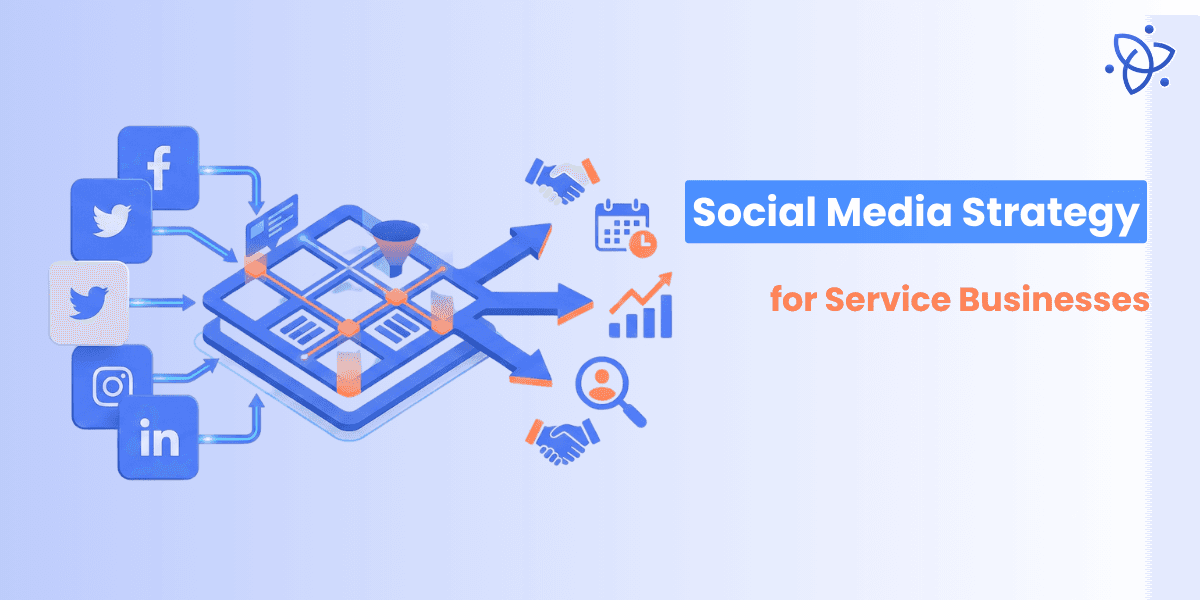
Service businesses don’t fail on social media because they lack creativity.
They fail because they copy strategies designed for product brands, influencers, or viral content creators—and then wonder why nothing converts.
Today, attention is abundant. Trust is not.
That’s why a social media strategy for service business brands needs a very different approach than ecommerce, media companies, or personal creators. Your audience isn’t looking for entertainment first. They’re looking for proof, clarity, and confidence that you can solve a real problem.
This guide breaks down exactly how service businesses should approach social media—what to prioritize, what to avoid, and how to build a system that consistently turns attention into leads, conversations, and clients.
This matters more than ever because:
-
Buyers research service providers extensively before reaching out
-
Social proof now influences purchasing decisions as much as referrals
-
Organic social has become a key trust-building layer in the sales funnel
If you’re a consultant, agency, coach, or founder selling expertise—not products—this is the strategy most teams miss.
What Is a Social Media Strategy for a Service Business?
A social media strategy for service business brands is a structured plan to use social platforms to build authority, trust, and demand for intangible offerings like expertise, consulting, or outcomes.
Unlike product marketing, you’re not selling something people can touch or compare easily. You’re selling:
-
Judgment
-
Experience
-
Process
-
Results
That changes everything.
How Service Business Social Media Marketing Is Different
Experienced marketers know this, but many teams ignore it in execution.
Key differences compared to product-based brands:
-
Trust > Reach
A smaller, highly relevant audience beats large, low-intent reach. -
Education > Entertainment
Content must reduce uncertainty, not just capture attention. -
Credibility > Creativity
Clever visuals don’t matter if your expertise isn’t obvious. -
Consistency > Virality
Clients come from repeated exposure, not one viral post.
In practice, service business social media marketing is less about trends and more about positioning.
Who This Strategy Is For (And Who It’s Not)
This guide applies specifically to:
-
Consultants and independent experts
-
Agencies and service-based startups
-
Coaches, strategists, and professional service firms
-
B2B and high-ticket B2C service providers
It is not optimized for:
-
DTC brands chasing impulse purchases
-
Meme-first or entertainment-only accounts
-
Influencer-led personal branding without a service backend
If your revenue depends on conversations, proposals, or retainers, keep reading.
The Core Problem Most Service Businesses Face on Social Media
Most teams post consistently—but randomly.
They share:
-
Motivational quotes
-
Generic tips
-
Behind-the-scenes photos
-
Promotional posts when sales are slow
The result?
-
Decent engagement
-
No inbound leads
-
No clear positioning
-
Confused audience
The issue isn’t posting frequency.
It’s strategic intent.
A service business social media strategy must answer one question clearly:
“Why should someone trust you with this problem?”
Everything else supports that.
The 7-Step Social Media Strategy Framework for Service Businesses
This framework is built specifically for service-driven growth, not vanity metrics.
Step 1: Define the Problem You’re Known For
Service businesses grow faster when they are known for one primary problem, not ten services.
Instead of:
-
“We do digital marketing”
-
“We help businesses grow”
Be specific:
-
“We help B2B SaaS companies fix low-quality inbound leads”
-
“We help founders turn expertise into predictable consulting revenue”
In practice, your content should repeatedly reinforce:
-
The problem you solve
-
The cost of ignoring it
-
Your perspective on solving it
This connects closely with social media strategy frameworks and planning processes.
Step 2: Choose Platforms Based on Buyer Behavior (Not Trends)
Most service businesses spread themselves too thin.
Experienced marketers know:
-
You don’t need every platform
-
You need the right context for trust
General guidance:
-
LinkedIn: B2B services, consultants, agencies, SaaS-focused teams
-
Twitter/X: Thought leadership, early-stage founders, tech audiences
-
Instagram: Coaches, creators, visual-heavy services, personal brands
-
YouTube: High-consideration services, education-heavy offers
Pick one primary platform and one secondary at most.
Depth beats distribution.
Step 3: Build Authority Content (The Backbone of Service Marketing)
Authority content is the foundation of social media marketing for consultants and service providers.
This content answers:
-
“Do they understand my problem?”
-
“Have they seen this before?”
-
“Can I trust their judgment?”
Examples of High-Authority Content
-
Breaking down real client scenarios (without breaching confidentiality)
-
Explaining why common approaches fail
-
Sharing decision-making frameworks
-
Comparing strategies and trade-offs
-
Calling out misconceptions in your industry
In practice, the best-performing posts often sound opinionated—not neutral.
“Most teams fail because they optimize tactics before fixing positioning.”
That’s authority.
Worth Reading: Social Media Strategy Examples That Failed
Step 4: Create Proof Without Selling Aggressively
Service businesses often overcorrect:
-
Either they never talk about results
-
Or they oversell constantly
The balance is embedded proof.
Ways to show proof naturally:
-
Before/after thinking shifts
-
Lessons learned from failed projects
-
Patterns noticed across multiple clients
-
What you don’t recommend anymore
This approach builds credibility without screaming “hire us.”
Service business social media marketing works best when proof is woven into education.
Step 5: Design Content Around the Buyer Journey
Most service buyers don’t convert after one post.
They move through stages:
-
Problem aware
-
Solution aware
-
Provider aware
-
Ready to talk
Your content should map to all four.
Content Mapping Example
-
Problem-aware posts:
“Why your leads look busy but never convert” -
Solution-aware posts:
“Three ways service businesses fix demand quality issues” -
Provider-aware posts:
“How we approach this differently from most agencies” -
Conversion-light posts:
“If this problem sounds familiar, start a conversation”
This is where most teams fail—they only post at one stage.
Step 6: Build Conversation Loops, Not Just Broadcasts
Social media for service businesses is not a billboard.
It’s a conversation starter.
High-performing accounts:
-
Ask thoughtful questions
-
Respond in comments with substance
-
Continue discussions in follow-up posts
-
Reference past conversations
In practice, comments often convert better than posts.
That’s why engagement strategy matters as much as content creation.
Step 7: Measure What Actually Matters
Vanity metrics are dangerous for service businesses.
You don’t need:
-
Millions of impressions
-
Viral reach
-
Follower spikes
You need signals of trust:
-
Profile visits from ideal clients
-
Saves and shares
-
DMs referencing your content
-
Comments asking follow-up questions
Track:
-
Content themes that lead to conversations
-
Posts that attract the right audience
-
Topics that shorten the sales cycle
This connects closely with social media planning and performance evaluation processes.
Real-World Scenarios: How This Looks in Practice
Scenario 1: B2B Consultant on LinkedIn
Instead of:
-
Daily generic tips
-
Motivational posts
They post:
-
Weekly breakdowns of failed GTM strategies
-
Strong opinions on why common advice doesn’t work
-
Clear explanations of trade-offs
Result:
-
Fewer likes
-
More DMs from qualified leads
That’s success.
Scenario 2: Service Agency Using Instagram
Instead of:
-
Random reels
-
Trend hopping
They focus on:
-
Explaining client decision-making
-
Showing how they think, not just what they do
-
Teaching followers how to evaluate agencies
Result:
-
Slower follower growth
-
Higher close rates from inbound leads
Experienced marketers know this trade-off is worth it.
Common Mistakes Service Businesses Make on Social Media
Mistake 1: Copying Creator or Influencer Playbooks
What works for creators often fails for service businesses.
Why?
-
Creators monetize attention
-
Service businesses monetize trust
Your strategy must reflect that.
Mistake 2: Being Too Safe With Opinions
Neutral content doesn’t build authority.
If your posts could be written by anyone in your industry, they’re not helping you stand out.
Mistake 3: Selling Before Educating
Most teams rush to CTAs:
-
“Book a call”
-
“Hire us”
-
“DM for services”
Without enough context, this creates resistance.
Education earns permission.
Mistake 4: Inconsistent Positioning
Changing messaging every week confuses the market.
Consistency over time builds familiarity—and familiarity drives conversions.
Best Practices and Actionable Tips
-
Anchor your content around one core problem
-
Repeat key messages in different formats
-
Prioritize clarity over cleverness
-
Show how you think, not just what you deliver
-
Engage actively with your ideal audience’s content
-
Treat comments as relationship-building opportunities
-
Audit your last 30 posts for positioning consistency
In practice, the fastest wins come from editing what you already post, not posting more.
How This Strategy Differs From Other Social Media Approaches
Compared to:
-
Ecommerce: Less urgency, more education
-
Creators: Less personality-first, more expertise-first
-
Startups: Less product updates, more insight sharing
Service businesses win by being understood, not just seen.
That’s the strategic shift most teams miss.
Final Thoughts: What Actually Drives Growth for Service Businesses
A strong social media strategy for service business brands is not about hacks or trends.
It’s about:
-
Clear positioning
-
Consistent authority
-
Repeated trust signals
-
Strategic patience
When done right, social media becomes:
-
A pre-sales filter
-
A trust accelerator
-
A long-term demand engine
Many marketers now prefer automated strategy builders instead of doing everything manually.
Related Blogs:
Key Takeaways
-
Service business social media marketing is trust-first, not reach-first
-
Authority and clarity outperform creativity and virality
-
Consistent positioning matters more than posting frequency
-
Content should map to the buyer’s decision journey
-
Real growth comes from conversations, not just impressions
If you approach social media as a system—not a posting schedule—it becomes one of the most powerful growth channels for service businesses today.