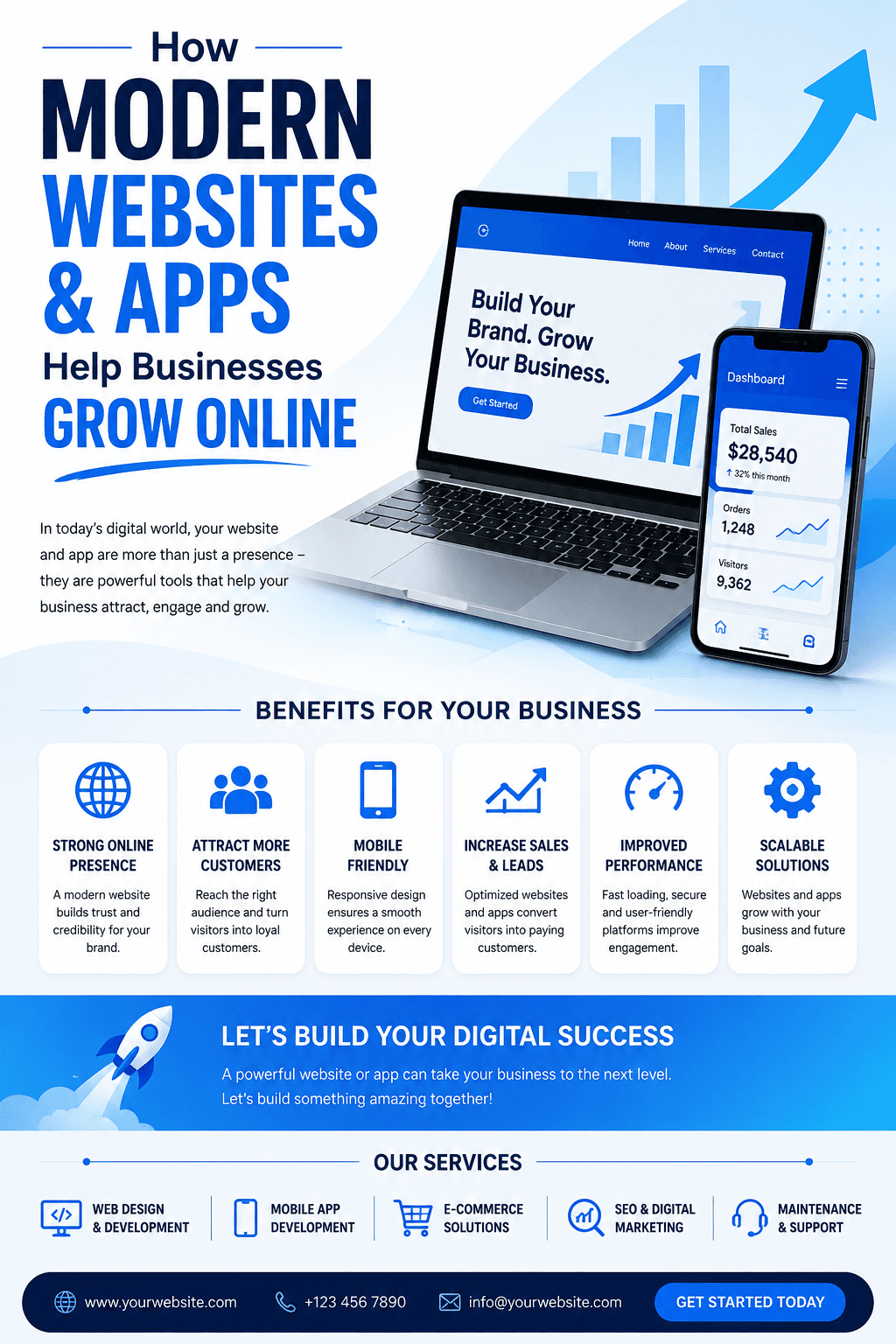
In today’s digital world, having a professional website is important for businesses, freelancers, startups, and individuals. A website can help you showcase your products and services, connect with customers, generate leads, and establish credibility. Whether you want to create your site for a small business or build a large online platform, proper planning is essential.
Website development has also changed significantly over the years. Businesses can now choose from different website-building platforms, professional developers, and website services depending on their goals and budget. Understanding the basic process can help you make better decisions before starting your project.
Why Do You Need a Website?
A website gives your business a place where customers can learn about you at any time. Unlike a physical store with fixed opening hours, your website can provide information 24/7.
A professional website can help you:
-
Introduce your business
-
Display products and services
-
Generate customer inquiries
-
Build brand credibility
-
Share useful information
-
Reach customers beyond your local area
-
Support online marketing campaigns
For example, a local service provider can use a website to display its services, contact information, customer reviews, and service areas. An online store can use a website to display products and accept orders.
The important thing is to build a website around the needs of your target audience.
Plan Before You Create Your Site
Before you create your site, you should determine its main purpose. Knowing what you want your website to accomplish makes the development process easier.
Start by answering a few simple questions:
-
Who is your target audience?
-
What products or services do you offer?
-
What information should visitors find?
-
What action do you want visitors to take?
-
Do you need online payments?
-
Will you publish blogs or other content?
-
Do you need a contact or inquiry form?
Once these questions are answered, you can create a basic structure for your website.
A typical business website may include Home, About Us, Services, Products, Blog, and Contact pages. More complex websites may require additional pages, dashboards, accounts, payment systems, or other features.
Choosing the Best Website for Website Design
There are many platforms and tools available today, which can make choosing the best website for website design confusing for beginners.
Different platforms are suitable for different purposes. Some are designed for beginners who want to create websites without coding, while others provide developers with more flexibility and customization options.
When comparing website-building options, consider:
-
Ease of use
-
Design flexibility
-
Available templates
-
Mobile responsiveness
-
SEO features
-
Security
-
Hosting options
-
Performance
-
Plugin or integration support
-
Scalability
A simple informational website may not require advanced development features. However, an e-commerce store or custom business platform may need more advanced functionality.
Instead of choosing a platform simply because it is popular, select one that matches your business requirements.
Understanding Website Services
Professional website services can cover much more than just designing a homepage. Depending on your requirements, website professionals may provide planning, UI/UX design, development, hosting, SEO, maintenance, security, and performance optimization.
Some common website services include:
Website Design
Design focuses on the visual appearance and user experience of a website. It includes layouts, typography, images, colors, navigation, and page structure.
Website Development
Development involves building the actual functionality of the website. Developers may work with different programming languages, frameworks, databases, and content management systems.
E-Commerce Development
Businesses selling products online may need shopping carts, product pages, payment gateways, order management, and customer accounts.
Website Maintenance
Websites require regular updates. Maintenance can include software updates, security checks, backups, content changes, and technical improvements.
SEO Services
Search engine optimization can help improve a website's visibility in search engines. SEO may involve technical optimization, content creation, keyword research, internal linking, and other strategies.
Combining these services can help create a website that is attractive, functional, secure, and easier for potential customers to find.
How to Build Site Successfully
To build site projects successfully, it is useful to follow a structured process.
1. Define Your Goals
First, identify what the website needs to accomplish. A business website may focus on generating leads, while an online store may focus on sales.
2. Choose a Domain Name
Your domain name is the address people use to access your website. Ideally, it should be simple, memorable, and relevant to your business.
3. Select a Platform
Choose a website platform based on your technical requirements, budget, and future plans.
4. Create the Website Structure
Plan the pages and navigation before development begins. This helps create a logical user experience.
5. Design the Website
Create a design that reflects your brand and makes information easy to understand.
6. Develop the Website
The development stage converts the design into a working website. Features such as forms, menus, product catalogs, and integrations can be added at this stage.
7. Add Content
Add useful and original content to your pages. Content should clearly explain your business and provide value to visitors.
8. Test Everything
Before launching, test the website on different devices and browsers. Check links, forms, buttons, images, navigation, and page loading.
9. Launch the Website
Once everything works correctly, connect your domain and make the website available to the public.
10. Continue Improving
Launching the website is not the end. Monitor performance, update content, fix technical issues, and improve pages based on user behavior.
What Is an App Website?
An app website can refer to a website created to promote or support a mobile application. It may provide information about the app, explain its features, show screenshots, and direct users to download it.
For example, a food delivery application may have a website explaining how the application works. Visitors could learn about available services and then download the mobile app.
A website can also work together with an application by sharing certain backend systems or databases. However, a website and mobile application are not necessarily the same thing. They can provide different experiences while supporting the same business.
If your business plans to have both a website and an app, it is useful to consider both platforms during the initial planning stage.
Making Your Website Mobile-Friendly
Many people access websites through smartphones. Therefore, mobile responsiveness should be a priority when you build a website.
A responsive website automatically adjusts its layout according to the screen size. Text should remain readable, buttons should be easy to tap, and navigation should work properly on smaller screens.
A website that works well on desktop but is difficult to use on mobile can result in a poor user experience.
Before launching your website, test it on smartphones, tablets, and desktop computers.
Website Speed Matters
Website performance can affect both user experience and business results.
Visitors generally expect pages to load quickly. Large images, unnecessary scripts, poor hosting, and unoptimized code can slow down a website.
Some ways to improve performance include:
-
Compressing images
-
Using optimized file formats
-
Removing unnecessary plugins
-
Improving server performance
-
Using caching
-
Reducing unnecessary scripts
-
Keeping website software updated
A faster website can make browsing more comfortable and help visitors reach important information more quickly.
When You Need Help Building a Website
Not everyone has the technical knowledge required to develop a complete website. If you are unfamiliar with design, coding, hosting, SEO, or security, getting professional help building a website can save time and reduce technical problems.
A professional can help you with everything from planning and design to development and launch. They can also recommend suitable technologies based on your goals.
When choosing someone to help with your website, look at their previous projects and understand exactly what is included in their service. Discuss important requirements such as mobile responsiveness, SEO, security, maintenance, and future updates.
Good communication is also important. Clearly explain your business, target audience, goals, and desired features before development begins.
SEO Should Be Considered From the Beginning
A website should be designed not only for visitors but also with search engines in mind.
Basic SEO considerations include using descriptive page titles, relevant headings, logical URLs, useful content, optimized images, internal links, and mobile-friendly design.
Keyword research can also help you understand what your potential customers are searching for. You can then create pages and content that address those searches naturally.
SEO is a long-term process. Publishing useful content consistently and improving your website over time can support organic visibility.
Final Thoughts
Whether you want to create your site for a personal project, startup, or established business, planning is one of the most important steps. Choosing the right platform, creating a clear structure, investing in professional website services, and focusing on user experience can help you develop a stronger online presence.
The best website for website design will depend on your individual goals, technical requirements, and budget. Some projects can be handled with simple website-building tools, while others require professional development.
If you want to build site projects that are fast, responsive, secure, and easy to manage, consider your long-term requirements before starting. And if the technical side becomes complicated, professional help building a website can make the process much easier.
A well-planned website is more than an online page. It can become a central part of your brand, marketing strategy, customer service, and business growth. With the right combination of design, development, content, SEO, and ongoing maintenance, your website can continue delivering value long after it is launched.
You can visit our website now and book your appointment to grow your business at a big level in the marketing industry.
Website: DeedOk IT Solutions
Address: 13/102, Sector 13, Sector 14, Vikas Nagar, Lucknow, Uttar Pradesh 226022