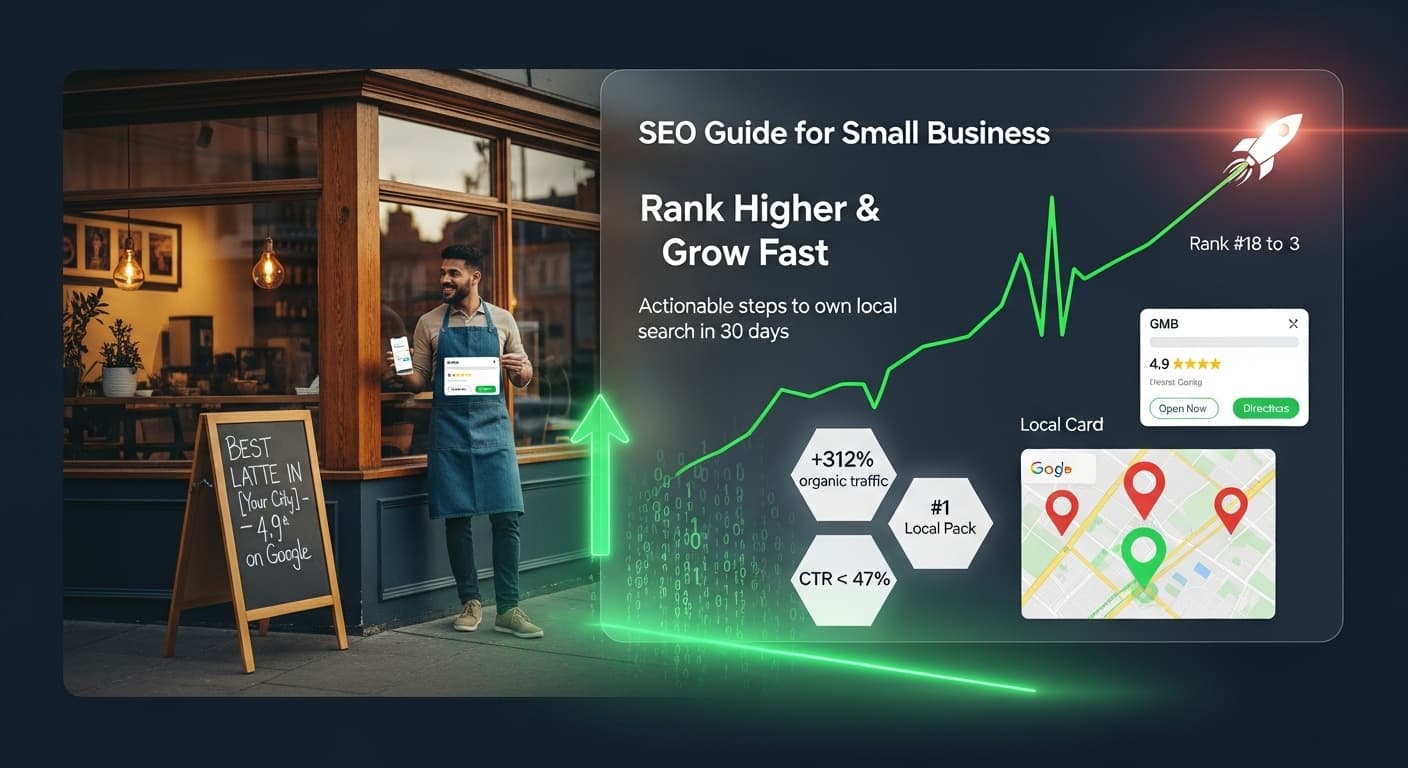
Having a website in 2025 is like having a business card nobody can find. You could have amazing products or services, but without visibility, you’re invisible.
This SEO guide for small business breaks down everything you need to rank higher, attract more customers, and grow your online presence — without breaking the bank. Whether you’re a small business owner, marketer, or startup founder, these strategies will help you compete with bigger players.
What is SEO and Why Small Businesses Need It
SEO (Search Engine Optimization) is the art of making your website more attractive to Google. Unlike paid ads that stop the moment you stop spending, SEO brings consistent, long-term traffic.
- Small business SEO strategy = sustainable growth + reduced ad spend.
- 93% of online experiences start with search engines — meaning if you’re not visible, you’re missing most of your potential customers.
Local SEO for Small Business: Owning Your Neighborhood
For local businesses, local SEO is your secret weapon. Instead of competing globally, you compete in your own city.
Key steps for local SEO success:
- Claim and optimize your Google Business Profile.
- Ensure NAP consistency (Name, Address, Phone number).
- Collect and respond to customer reviews.
- Add photos and update business hours regularly.
Pro tip: Businesses with optimized Google profiles get 42% more requests for directions and 35% more clicks.
SEO Checklist for Small Business Owners
Follow this simple checklist to cover the basics:
- Keyword research for your products/services
- Clean URLs with focus keyword
- Title tags ≤ 60 chars + meta descriptions ≤ 160 chars
- Mobile-friendly design (Google ranks mobile-first)
- Fast loading speed (optimize images, use caching)
- Use schema markup for better visibility
- Internal linking between relevant pages
Affordable SEO for Small Business: Compete on a Budget
You don’t need a huge budget to see SEO results. Start with affordable (or free) tactics:
- Use free SEO tools like Google Analytics, Search Console, and Keyword Planner.
- Publish optimized blog posts answering customer questions.
- Build backlinks through partnerships, guest posts, and local directories.
- Repurpose content (blogs → videos → social media snippets).
Best SEO Practices for Small Business Websites
To consistently perform well, focus on these core practices:
- Write helpful, original content (not keyword stuffing).
- Use short paragraphs, bullets, and visuals for readability.
- Add alt text with keywords for images.
- Regularly update existing pages.
SEO Tools for Small Business Growth
Recommended tools to simplify your SEO work:
- Rank Math SEO – On-page optimization, schema, analytics
- Google Analytics & Search Console – Free insights
- AnswerThePublic / Ubersuggest – Keyword ideas
- Ahrefs / Semrush – Advanced link and keyword tracking
Beginner SEO Guide for Business Owners
If you’re just getting started:
- Focus on long-tail keywords (e.g., “best bakery in Los Angeles” instead of just “bakery”).
- Create blog posts that fully answer customer questions.
- Track results monthly (not daily).
- Start small, stay consistent.
SEO for Startups in California (and Competitive Markets)
For startups in California or similar competitive markets, SEO can level the playing field:
- Target niche, high-intent keywords.
- Highlight unique value in your content.
- Build authority with local partnerships and PR mentions.
- Invest early in SEO to reduce long-term ad spend.
Measuring Success in SEO
Track the metrics that matter:
- Organic traffic growth
- Click-through rates (CTR)
- Conversions and revenue from organic search
- Cost per acquisition (CPA) compared to ads
Conclusion: Start Your SEO Journey Today
SEO isn’t magic — it’s a proven system. By following this SEO guide for small business, you’ll:
- Attract more local customers
- Reduce reliance on paid ads
- Build long-term visibility online
Pick one checklist item today — whether it’s optimizing your Google Business Profile or improving your site speed — and take the first step. Your future growth starts now.